Day 34 (of SOL 2025) Dear @shanesafir & @sjeducate 3/10 “spoilers” of traumas in Pedagogy of Voice (deficits)
Dear Shane and Sawsan… in Pedagogies of Voice, you bring up “10 Toxins” carried in the form of signature practices and dscourses – here is a thought on:
3. Deficit ideology
This includes:
- Racialized grouping and tracking
- Negative language or thinking about students/families at the margins
- Justifying low-rigor or highly rigid curriculum as “what the students need”
Sounds like:
- “He doesn’t even try! So why should I try to help him?” “These parents/kids just don’t care.”
- “She clearly has better things to do than study.”
- “Their culture expects x or y.”
- “If he was not in my class, it would solve so many problems!”
“Readiness” and “engagement” are also buzzwords that will sometimes perk up my ears… I gave some societal observations – around ‘readiness for school’ there are common expectations that are no longer quite so common – such as students knowing key rhyming words and a common story/media experience – homes not having the same/limited media experiences is one thing – kids have more than Sesame Street to entrance them, and not everyone/anyone watches the same Sunday night family movie… but that’s not the kids fault… we know this, and our education system needs to be okay working with this… as for engagement;.. we’ve been noting and talking about the graphs for over a decade now – without any clear pathway other than further alienating school life experiences further away from the real world outside of 9-3 bells… so I’m intrigued to see further big surveys that have looked at student engagement…
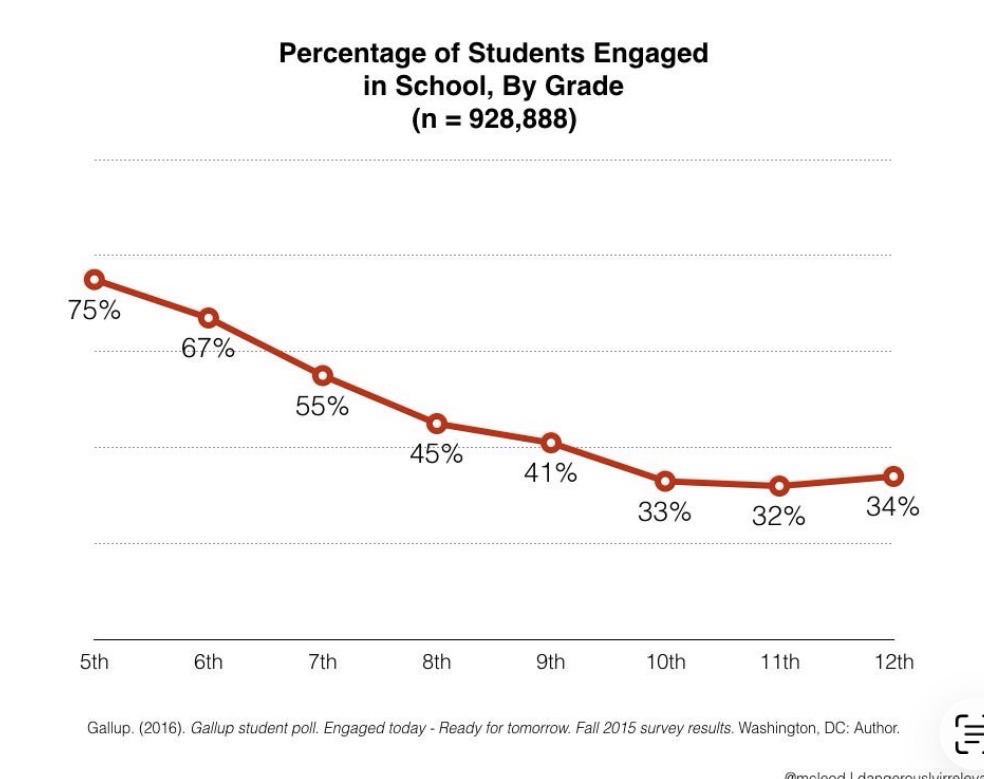
My other deficit-frustration includes how often BCs adult dogwood is used as an example of when educators decide, usually based on racial bias, as an example of”easier” grad pathway to navigate… for the families and kids who I have worked with on this pathway… it has been anything but an “easy pathway” – including for one of my own kids at home…
Then there’s the “norms” of so-called “good students”- what are the good parts you can find in the “bad students”?
Two other definitions of deficit ideology:
- Briefly, deficit ideology is a worldview that explains and justifies outcome inequalities— standardized test scores or levels of educational attainment, for example—by pointing to supposed deficiencies within disenfranchised individuals and communities
- Deficit ideology has also been referred to as “the perfect crime” as it subtly shapes school policies and practices, making victims of inequity the primary suspects for school failure, blaming their “poor homes” or cultural and linguistic “deiciencies”.
Good toxin to move away from…
 Technolandy
Leave a comment