Day 6 (of 2025/26) #FASD Awareness Day shoutout to @canFASD @POPFASD @awareness_fasd
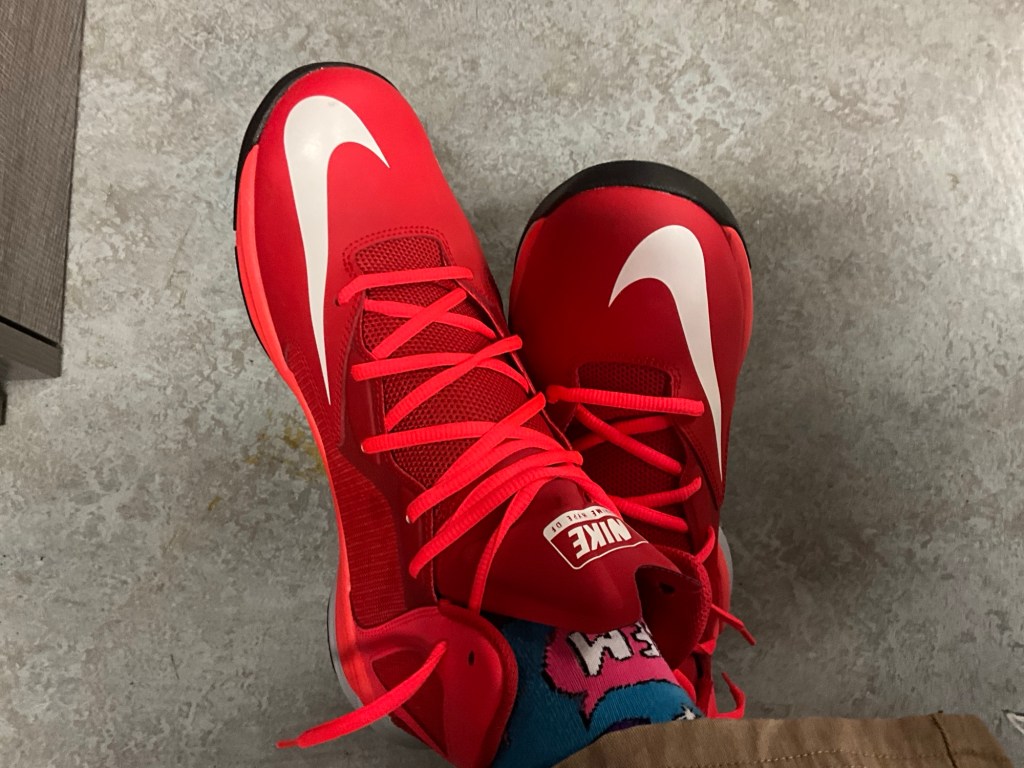
Friday September 9th – International FASD Awareness Day; a time to recognize and support individuals affected by Fetal Alcohol Spectrum Disorder – Wear Red Shoes if you can and explore: www.fasdoutreach.ca (BC’s provincial outreach program for FASD) and https://canfasd.ca/fasd-awareness-month/
2025 Theme is Everyone Plays a Part: Take Action!
Video: https://www.instagram.com/reel/DOYzgzLkZcY/?igsh=MWlwZzF6bXB5cGVveg==
Another way to show support – wear red shoes… something that I keep forgetting to add to my vast shoe collection – so I had to borrow some slightly smaller shoes for today:
There is a lot always being learned and shared around FASD; and a better job helping remove the stigma associated with FASD – there has historically been a lot of blame at parents… despite the evidence that many parents did not know they were pregnant until well into the pregnancy, and did not alter there own consumption of adult beverages… and the ‘requirement of a confession’ has been very uncomfortable to work with in the education world because of the stigma and self criticism for things that many could not have known about … but the guilt can be very heavy and lead to a desire to not talk about it and seek supports. This needs to NOT be about blaming – as the Canadian organization CanFASD.ca says: Fetal Alcohol Spectrum Disorder (FASD) is a lifelong disability that affects the brain and body of people who were exposed to alcohol in the womb. Each person with FASD has both strengths and challenges and will need special supports to help them succeed with many different parts of their daily lives.
Popfasd (The Provincial Outreach Program for FASD) has done some amazing work helping to identify some key skills and strategies that work for all students… not just those working with FASD. Relationships and Consequences are two of the ‘big things’ that are sometime tricky to navigate, but that is not universal… though I will admit that early in my career, I was so happy to find POPFAD’s lists that helped me (and my classroom) significantly:
Key takeaways/reminders:
- Reframe the behaviour – as Ross Greene reminds us, ‘kids do well if they can!” – so it that they Won’t? Or they Can’t? Won’t is judgemental, can’t *yet* is about curiosity
- Be a stress detective:
- Find stressors and reduce them
- Find unmet needs and meet them
- Find skill deficits and teach them
- Talk in concrete terms and avoid abstract languages – metaphors fly over their head because their reflexes aren’t fast enough to catch them
- Be consistent – use common words and strategies in school and at home.
- Use repetition – re-teach many times to get things stored in long-term memory – I know I used to get frustrated how we would take a bunch of steps forward and then seem to rewind all the way back to step one… it gets better when you can predict this happening
- Keep It Short & Sweet – simplicity ma
- Routines help reduce anxiety – even in a learning room like mine in which things run late…. Having a visible schedule helped, especially when we needed to make adjustments
- Being specific helps – step by step instructions… and often one instruction at a time!
- Structure matters to build a sense of foundation and having trusting relationships where they know they can make mistakes and still be a welcome part of the learning community…
- Supervision is important – but not for consequences, but rather to scaffold greater independence!
Who wouldn’t benefit from those 10 ‘magic keys’? Good for all, but especially with FASD mindsets.
With the other reminder that behaviours ARE communication – so pay attention and be mindful of how you react!
 Technolandy
Leave a comment