What does your brain do
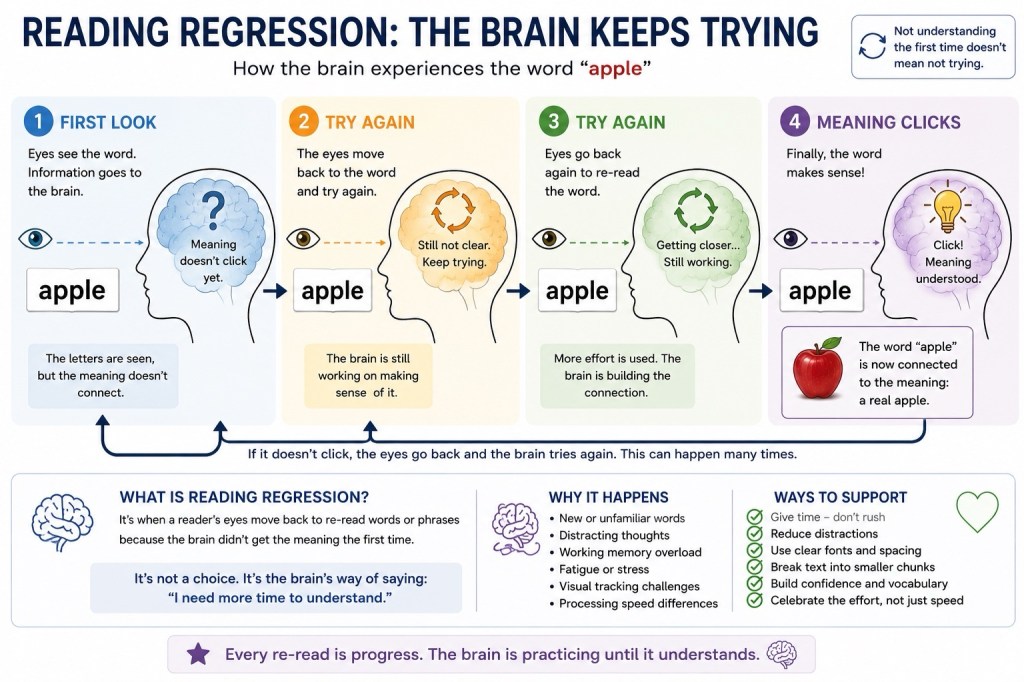
when you read APPLE?
This is not as easy a question as it first appears…
Reading Neurologies that we don’t often unpack and understand till later in life. Will knowing that our brains all process text differently help with the reading process earlier in life?
Read the word: APPLE.
Then keep revealing that “read apple” isn’t actually one neurological experience:
- Visualization → apple → 🍎
- Aphantasia → understands apple, but no mental 🍎
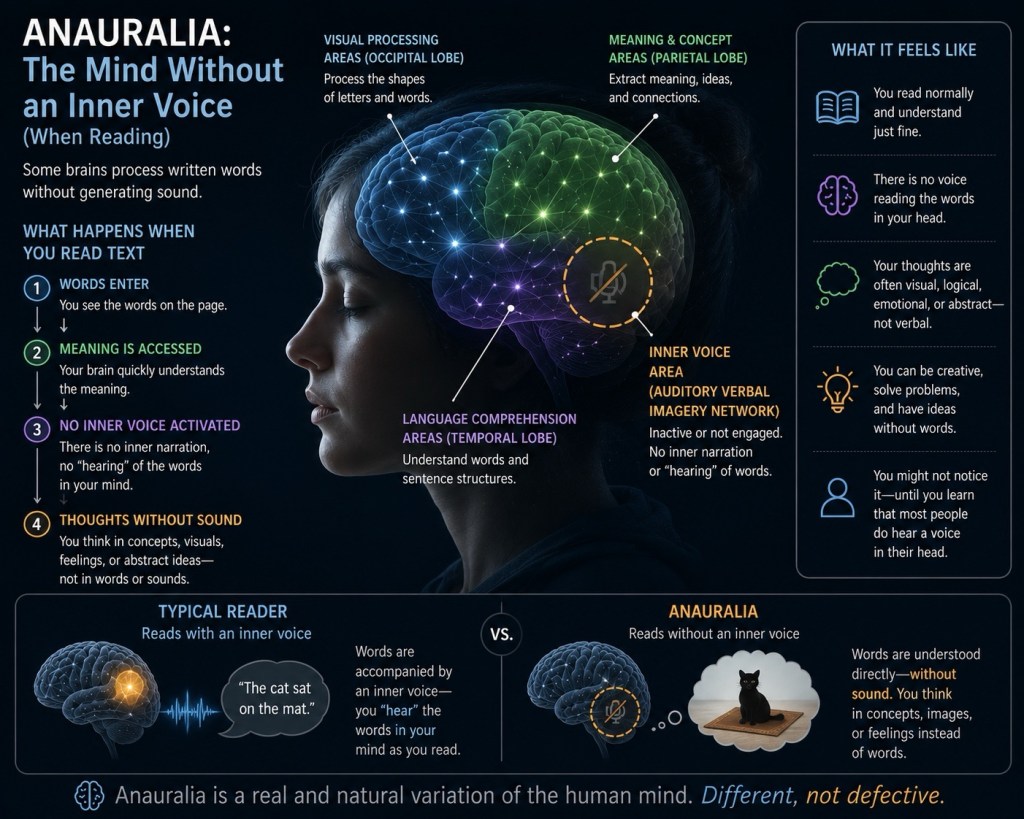
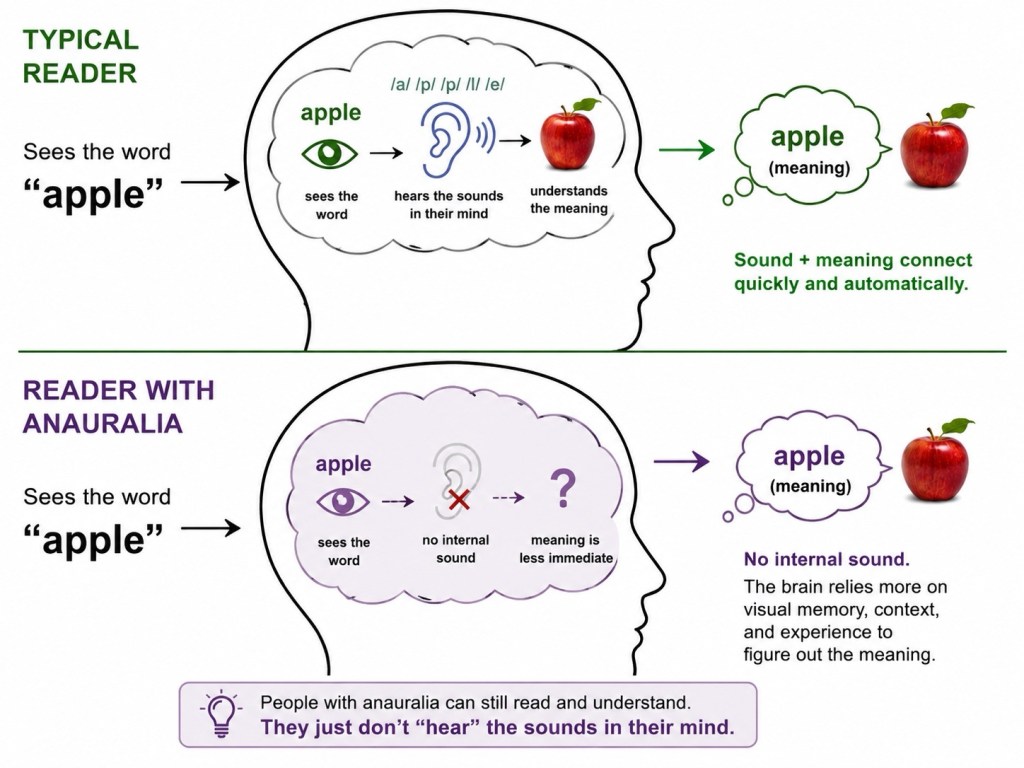
- Anauralia → understands apple without internally hearing “apple”
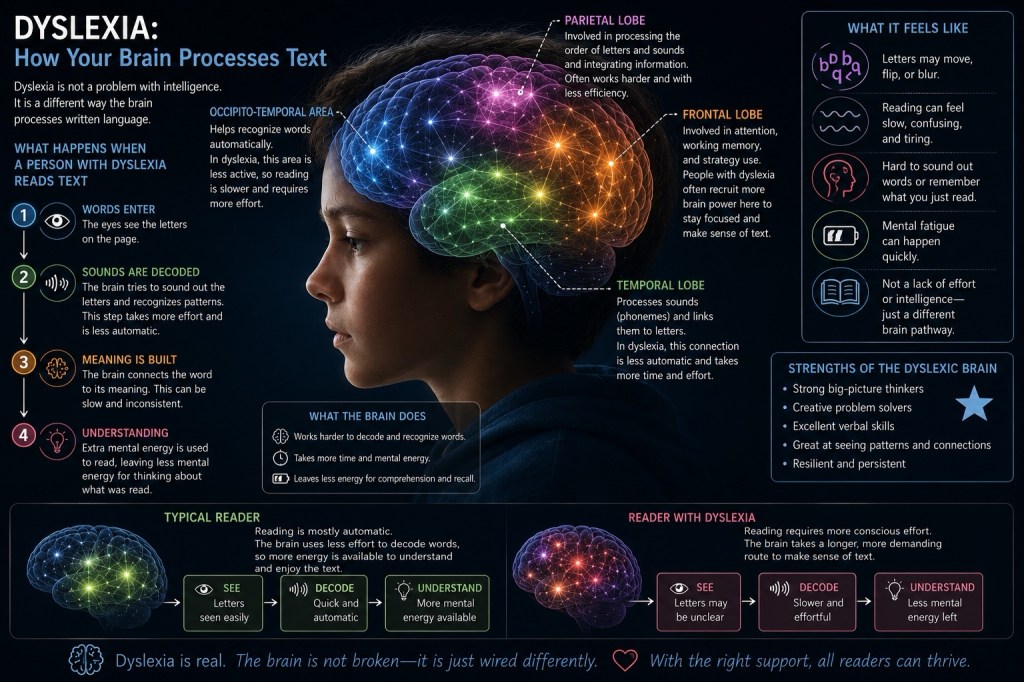
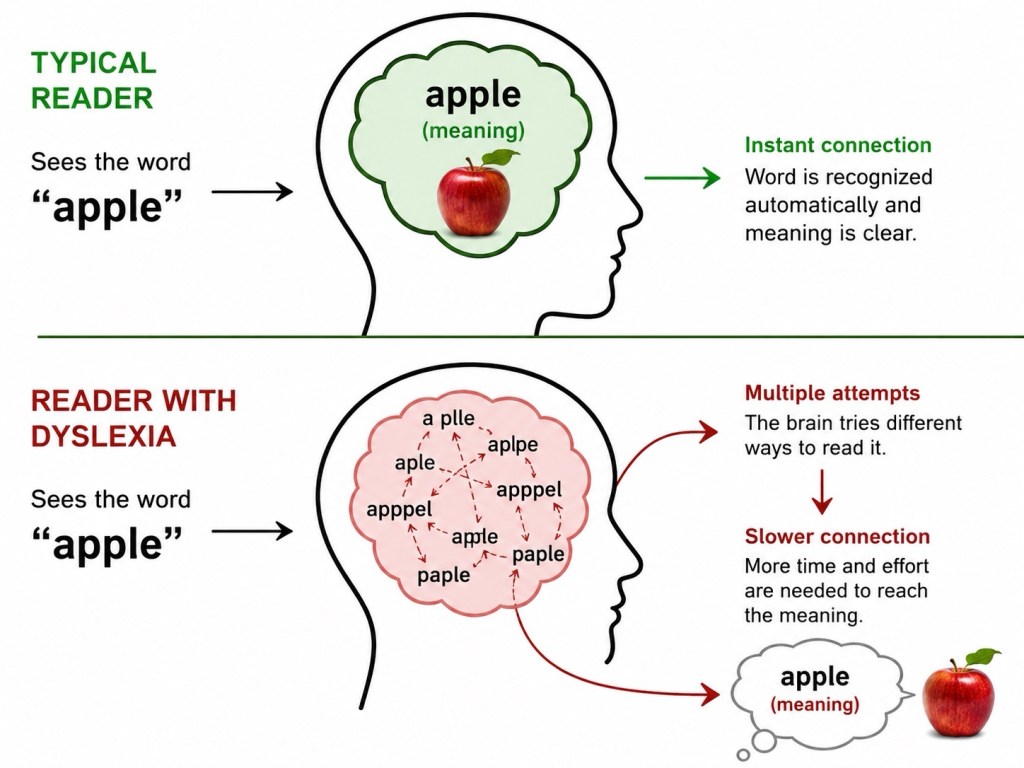
- Dyslexia → decoding/word recognition may require a different or more effortful route
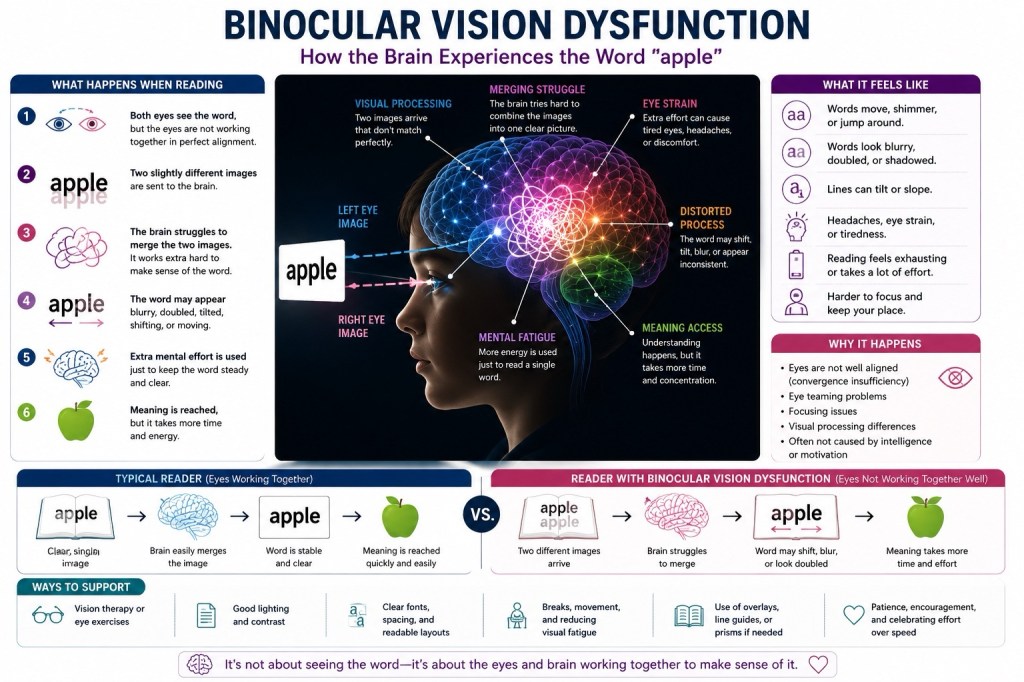
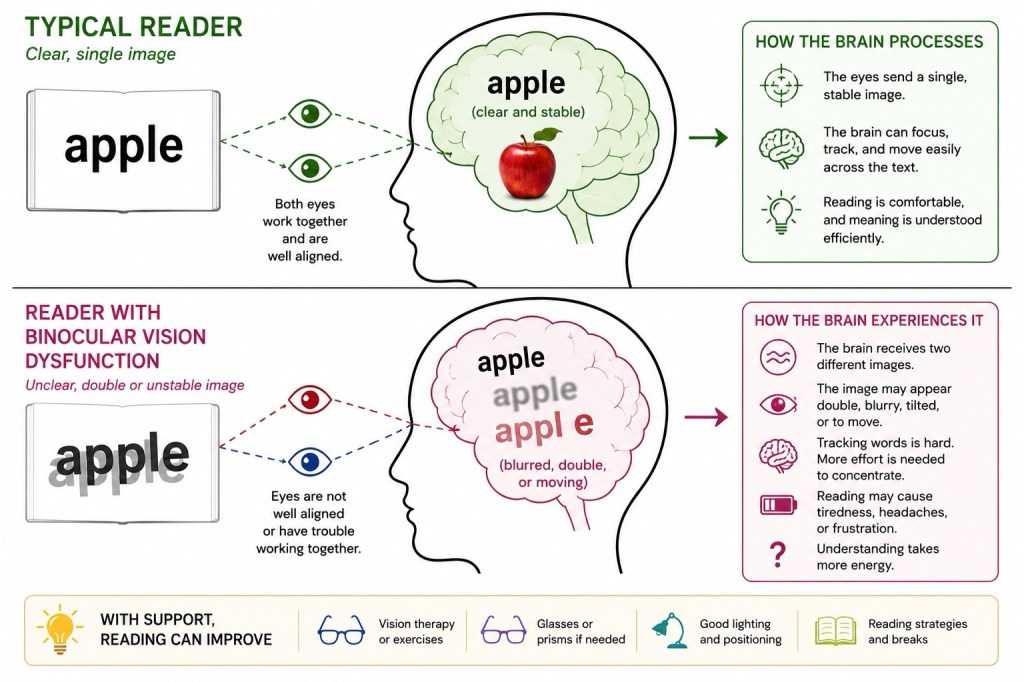
- Binocular vision dysfunction → the visual input itself may be unstable before decoding even starts
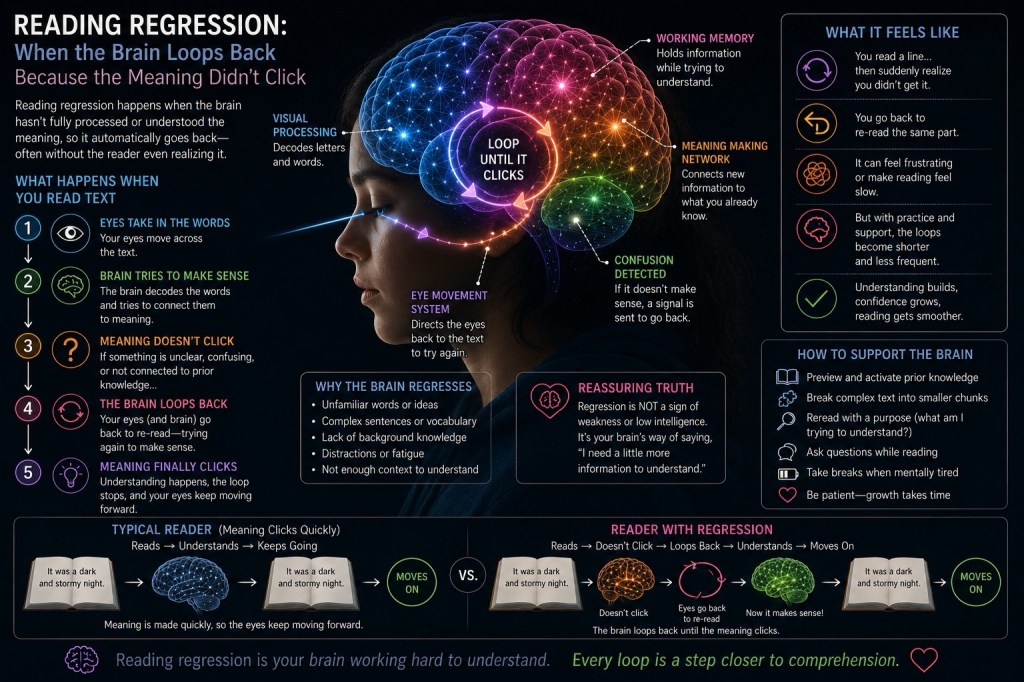
- Reading regression → apple → ? → reread → ? → reread → 🍎
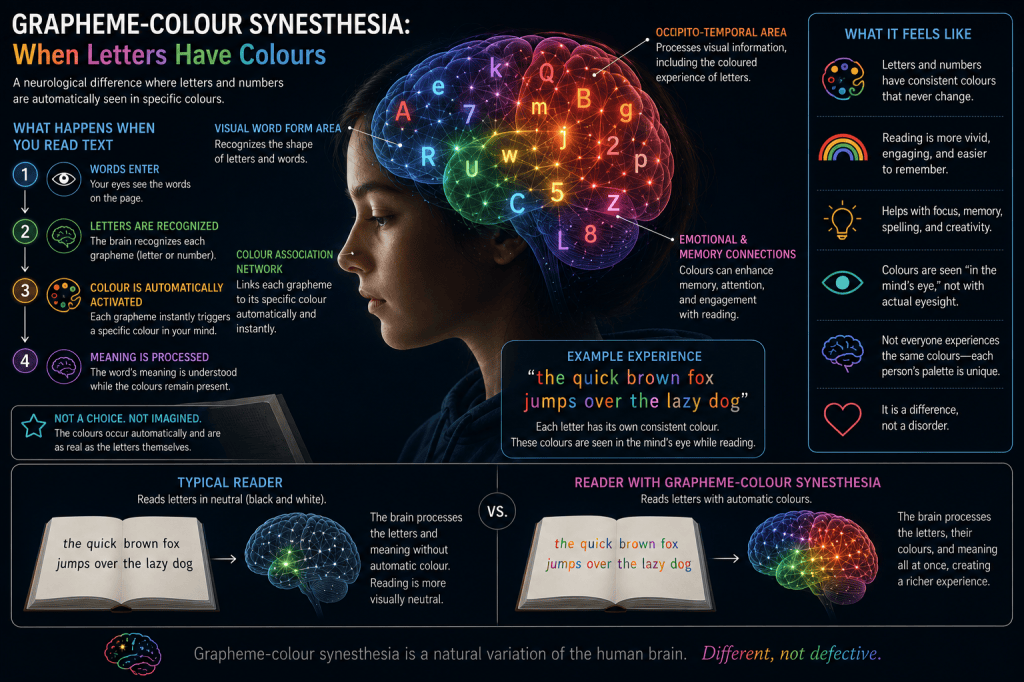
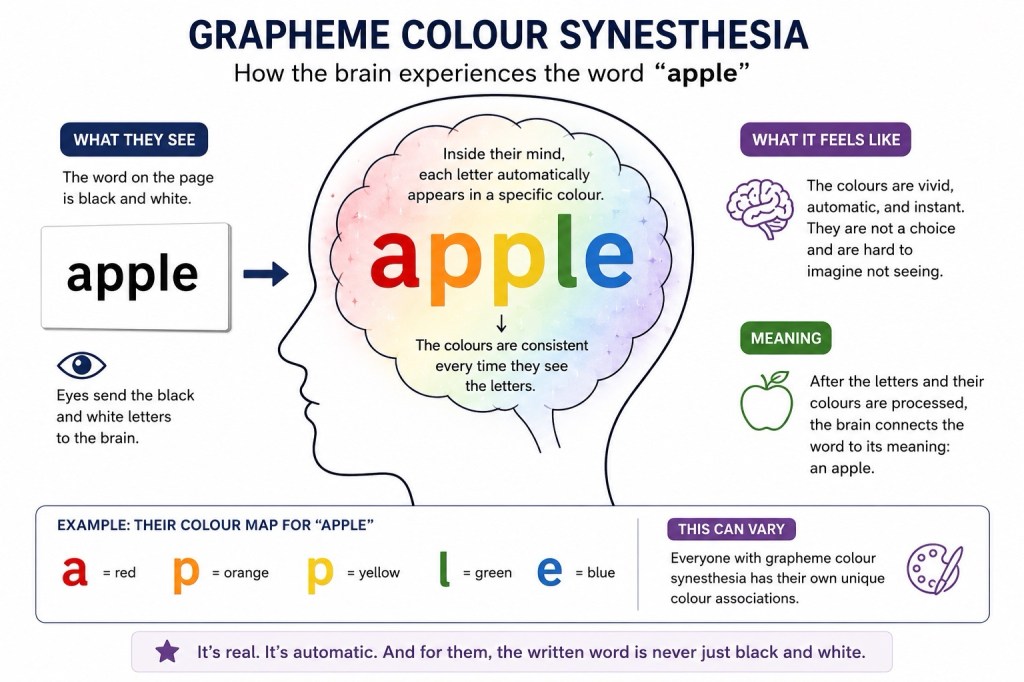
- Grapheme-colour synesthesia → a p p l e carries automatic colour experiences
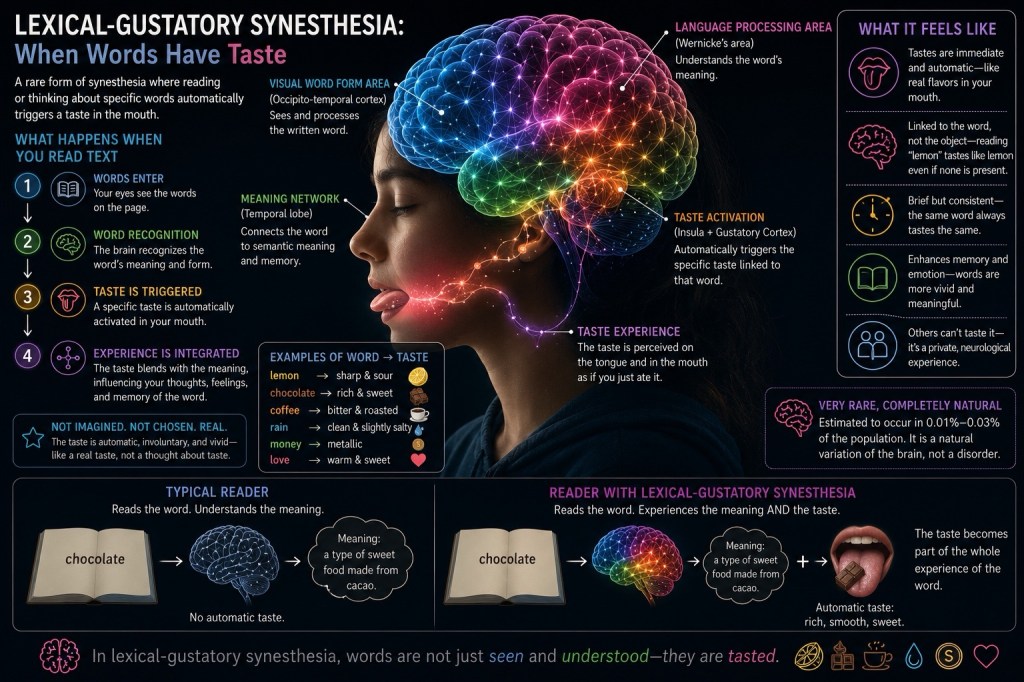
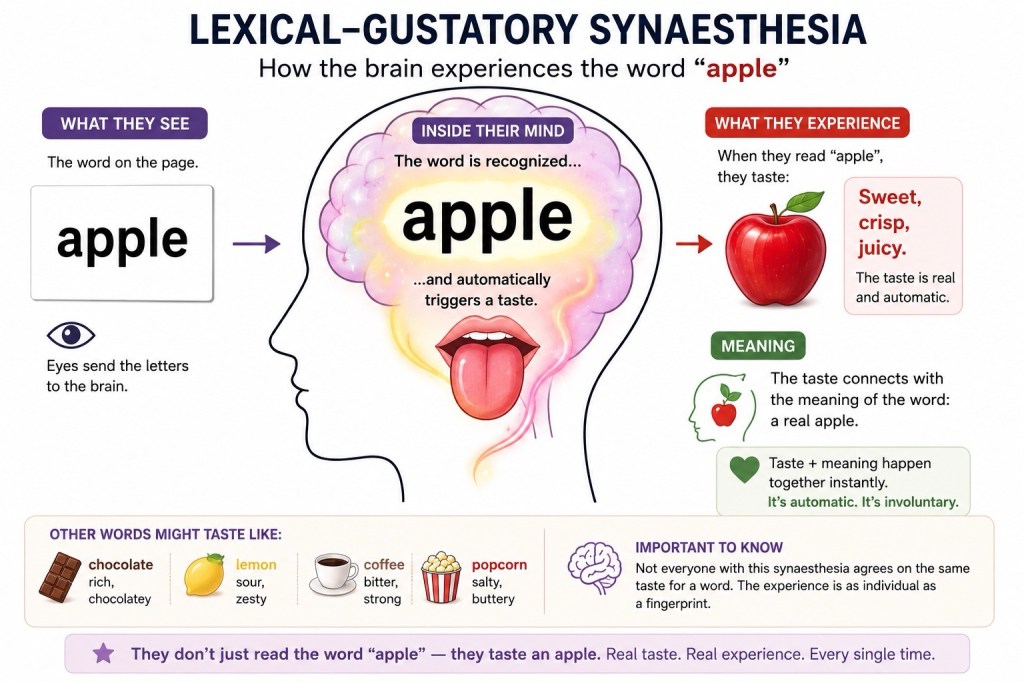
- Lexical-gustatory synesthesia → apple may automatically trigger an associated taste
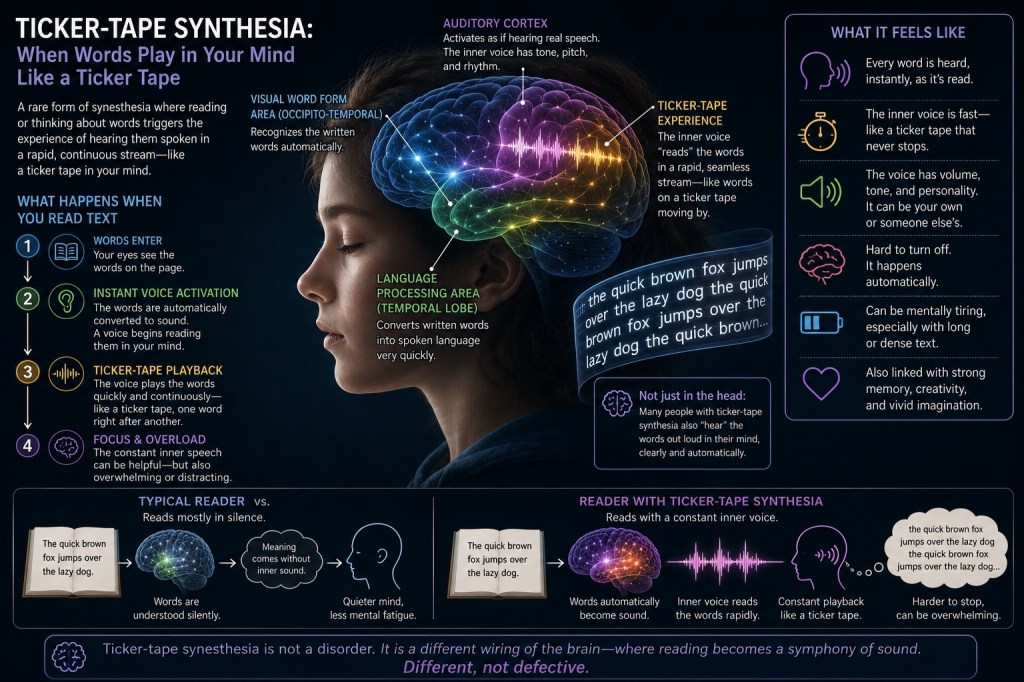
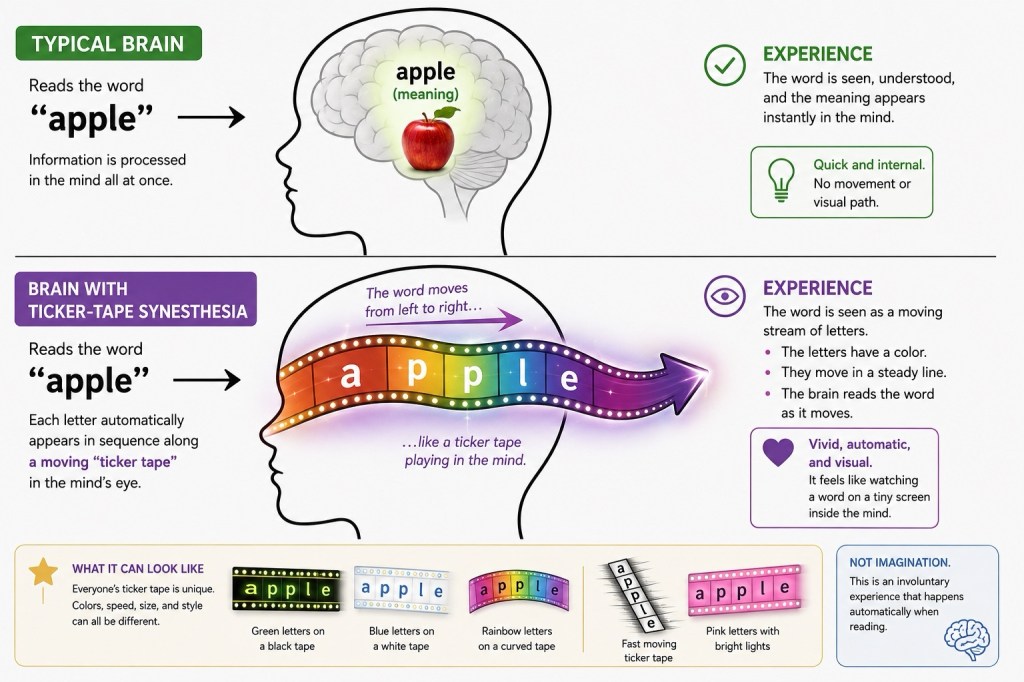
- Ticker-tape synesthesia → language may automatically produce internally visualized written words
And then I’d hit them with the educational question:
Yet how often do all nine students get the same reading goal?
- Reading Visualization:
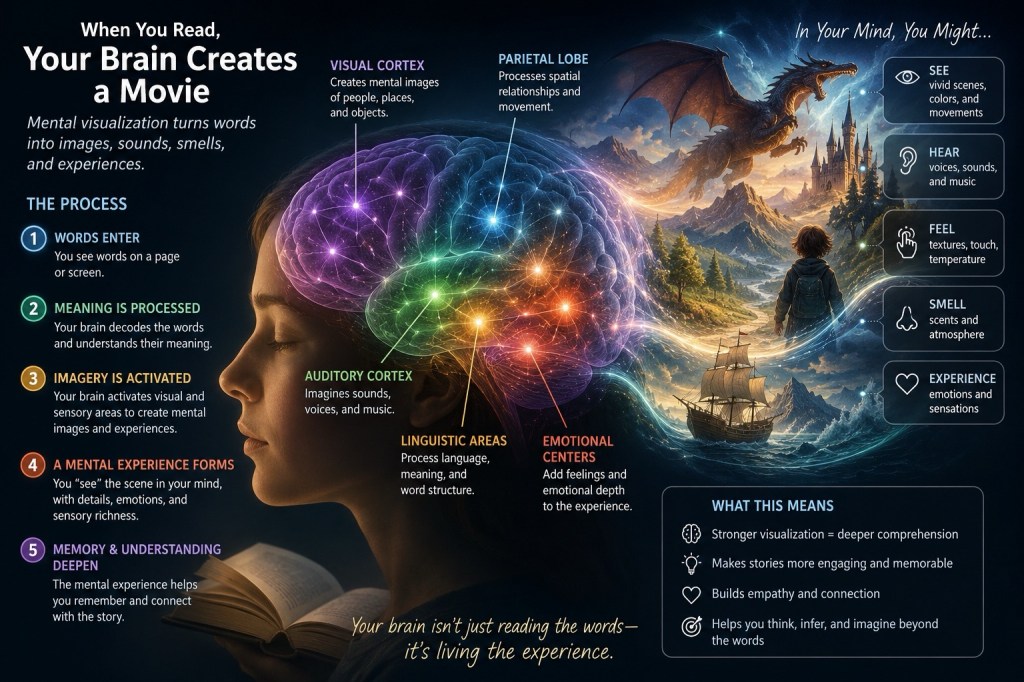
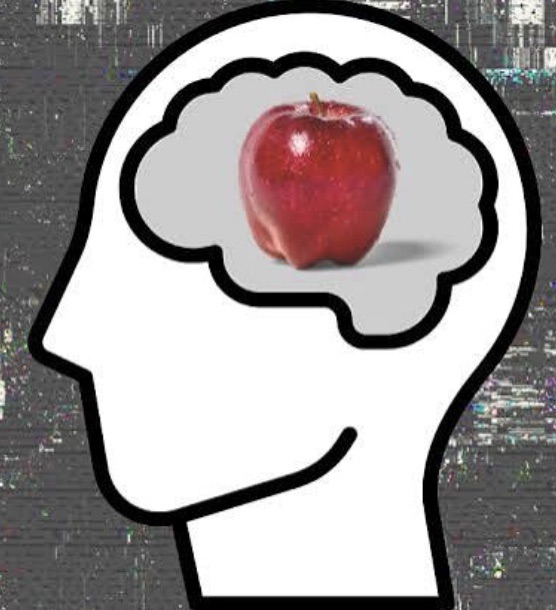
2. Aphantasia:
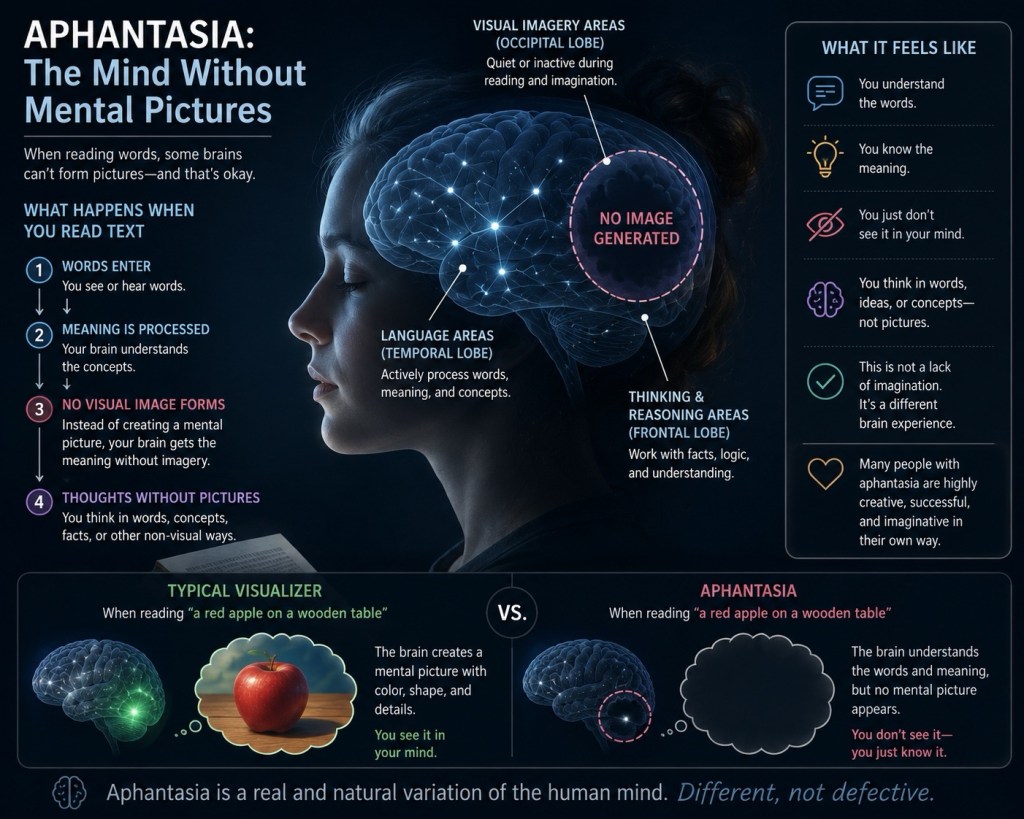
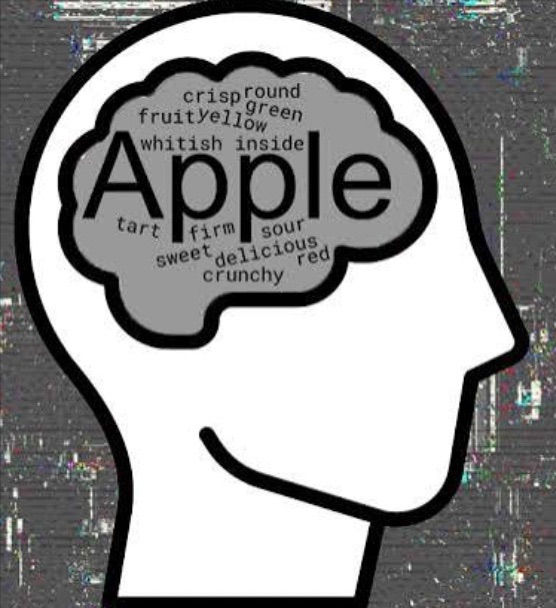
3. Anauralia
4. Dyslexia
Binocular vision dysfunction
Synthesias make thing even more… interesting…
6. Ticker-tape synthesia
7. Grapheme-colour synesthia
8. Lexical-gustatory synesthesia
9. Reading Regression
How many of our reading strategies assume that another person’s internal experience works like ours?
How much of our data assumes brains are reading in the same way… is your class all processing text the same? I’m suggesting starting an inventory of these approaches for consideration with your data…


Leave a Reply