Day 6 (of 2026/27) thoughts on reading – a workshop on ‘building better reading outcomes: the role of instruction’ by Dr Una Malcolm by Dyslexia Canada
I’ve got some thoughts on reading lately – especially thinking of neurologies… Styles brains use
Heck, is reading just a Fad that’s winding down?
Love to get someone from Dyslexia Canada here as too often reading concerns such as dyslexia are simplified to ‘use blue paper and blue lenses’ and get used to it…
Getting dyslexia right means getting reading right for all children.
Note – my youngest has dyslexia – likes it when she can hear and read at the same time to process reading… still not fun when the letters fall of the page…
Backgrounder – how many students (even our parents) went through school… ‘not measuring up to capabilities’ and reading/writing being a key target…
Plan: Foundations of MTSS
Information processing, working memory, cognitive load
Explicit instruction/direct instruction
(Practice) – maybe!
Literacy unlocks potential (me: even in a visual/audio golden age of information and entertainment?)
Literacy to read isn’t easy for everyone (me: definitely – in hindsight, so glad it was easy for me) likely the biggest: ‘it depends on their instruction’. With a segment of reading disorders/minorities.
Impact on child: I couldn’t tread and everyone else could. I felt like a complete and total idiot, sometimes I wished I would just die would I could stop feeling so stupid – Age 10
Students with dyslexia (and virtually all other students) can learn to read
- if they receive effective instruction with sufficient intensity
Linda Siegel – The development of Reading IN Children WHo Speak English as a Second Language: https://www.researchgate.net/publication/9035020_The_Development_of_Reading_in_Children_Who_Speak_English_as_a_Second_Language moved those at risk 37.2% in kindy to 3.7% in G2
MTSS
Multi Tiered System of Support
Tier 3 – 5% – intensive; few students
Tier 2 – 15% – targeted; some students
Tier 1 – 80% – universal; all students
School wide assessments; data-based decision making; collaborative problem solving; professional learning
Nobody has ‘not enough students to work with’.
Consider and Connect: Is there capacity to support all students with intensified support who need it?
When students get support, is it the intensity they need?
Nasty Landy consideration – how about for home facilitated learners in an online school?
Children learn to read in a complex ecosystem, but instruction is a powerful lever for change.
Effective Practices x Effective Implementation x Enabling Context = Socially Significant Outcomes
“Students of teachers who taught with greater adherence to the UFLI Foundations program had larger effects – Holly B Lane – Effect of INstructional Program – https://ila.onlinelibrary.wiley.com/doi/10.1002/rrq.607
*************
Me: Hmmm – Provincial Online School Consideration?
In PIE, you could potentially have:
Tier 1: learner + home facilitator + teacher resources
↓
Tier 2: teacher-supported targeted intervention, possibly synchronous/online
↓
Tier 3: intensive specialist intervention, potentially delivered virtually or through community partnerships
*********************
Me: Still pondering: When a learner struggles, are we identifying the instructional skill that is missing, or merely observing the behavioural manifestation of the struggle?
*****************
Implementation: Ideal Conditions
Timeline 3-5 years. Real world: 7-10 years
Challenges: leadership turnover; competing priorities;
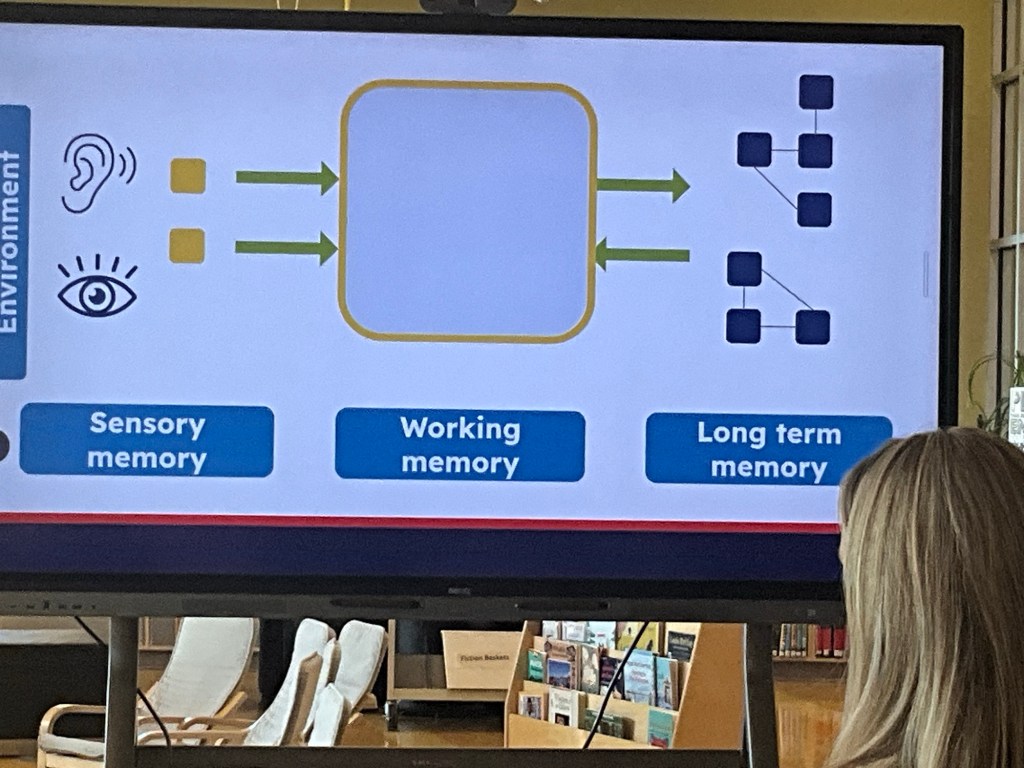
BOOK!
Willingham: outsmart your brain
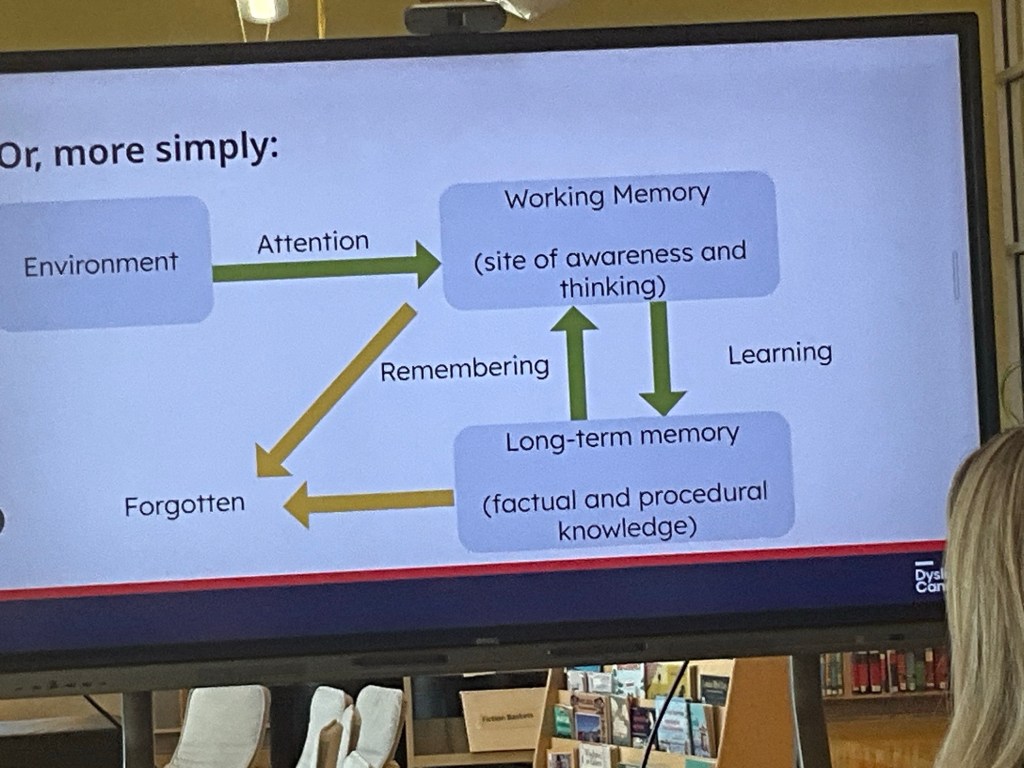
Types of loads:
intrinsic – managed
Extraneous
Germane
Leverage schema when we can
Student working memories Vs. Our instruction
Principles of Instruction – Barbara Rosenshine
Clarity
Dear objective
Clear rationale for skill being taught
Clear directions
Instructional Design
- instructional routine for items
- Read the start sentence
- Read the add sentence
- Underline what is added
- Combine and write new sentence.
Instructional Delivery
- monitored student responses
- Listened carefully to choral responses
- Listened carefully to choral reading
- Monitored and circulated ruing written responses
When is it important to frequently elicit responses
- contributes to a positive learning environment
- Increases engagement
- Increases on-task behavior
- Increases accountability
- Promotes desired behaviours
- Reduces inappropriate behaviours
- Keeps class moving along
Choral Responses – when
- When answers are short and the same
- When rehearsal of information is desired
- When the quick retrieval is desired
Choral Responses – how
- students are looking at a book/page
- Focus attention on item
- Asia. Question
- Provide thinking time
- Provide an auditory cue
Resources
Needs assessments (onlit) onlit.org/resource/school-needs-assessment
Onlit.org/resource/five-minute-focus-slide-deck
Onlit.org/resource/problem-solving-worksheets-classroom-level (wrong link)
Landy synthesis
Reading instruction. It’s vital to have a plan. I’m also reminded that everyone has a plan until they get punched in the face. In education, I hope that’s metaphorical. Gotta know reader needs. Then use the right instruction at the right time. It was great to see an example that reinforced the value of guided, gradual release of responsibility (I do, we do, you do).
Collaborator Finds:
MTSS Homeschool Research https://nwcommons.nwciowa.edu/education_masters/534/?utm_source=chatgpt.com
Workshop was great for traditional environments, but online and home facilitated…
 Technolandy
Leave a comment